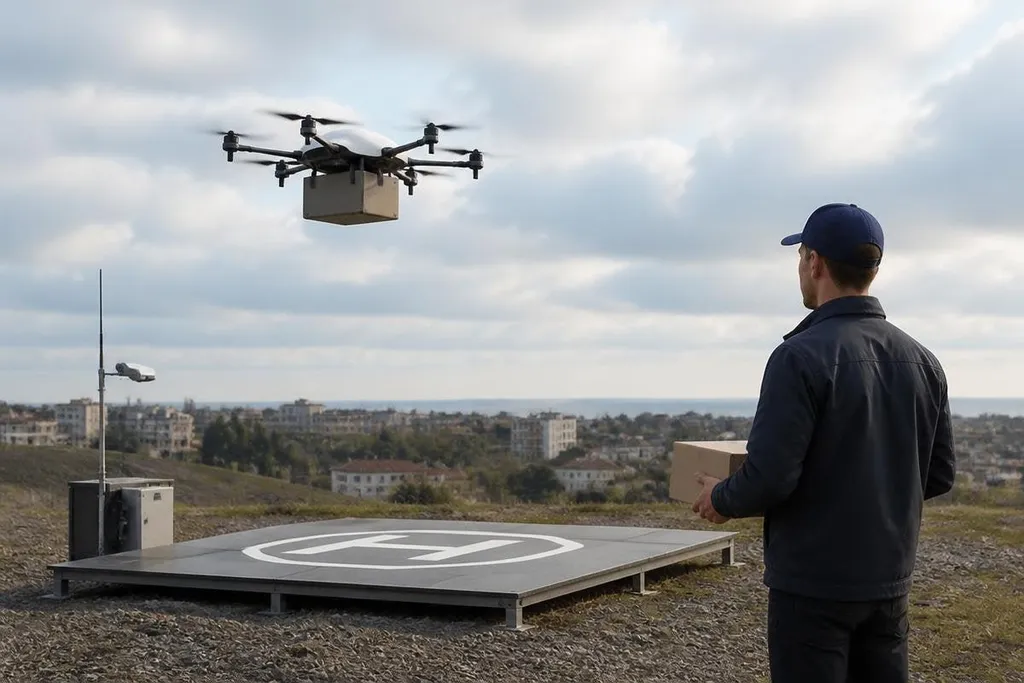
A delivery drone is a flying logistics service, not only an aircraft. The business case depends on the route, the parcel, and the work needed on the ground before and after each flight.
- Short routes: Drones fit urgent deliveries across sites, campuses, and hard-to-reach areas.
- Repeat work: Fixed routes make planning, charging, and staffing easier.
- Main risk: Airspace approval and safe handoff can cost more than the flight.
The first opportunity: urgent local delivery
Small parcels create the clearest starting point. A drone can carry items from a store, pharmacy, warehouse, or spare-parts room to a nearby landing point, so a company can sell speed on routes where a van spends much of its time waiting and driving back.
That model works best when the item matters more than the transport fee. Medical supplies, machine parts, and time-sensitive documents fit this pattern. A late replacement part can stop a machine, so a short flight may be worth more than a low-cost van trip.
The operator still needs a repeatable handoff. The drone may land at a marked pad, lower the parcel by cable, or place it in a locked box. Each method changes the site cost, the safety plan, and the time needed to finish the job.
Selling the service instead of the aircraft
Many customers won't want to own aircraft, train pilots, or manage flight software. That creates a service business in which the drone company supplies the aircraft, remote supervision, maintenance, route planning, and parcel tracking under one contract.
The contract needs clear limits. It should state the payload size, service area, weather rules, flight hours, failed-delivery process, and responsibility for damage. Without those terms, a low flight price can hide a costly manual job after every exception.
A second model sells the flight system to a company that already has staff and sites. Warehouses, hospitals, ports, and large industrial locations may use a private route for parts or samples. The buyer then pays for hardware, software access, training, and support rather than a fee for each parcel.
That business model also depends on what happens after the drone lands. Delivery drone business reports from Robot24.com can tie aircraft, route tests, prices, and service terms to named operators before the discussion moves to ground systems.
The less obvious business: ground systems
The aircraft gets attention, but the ground setup decides if the service can run. A useful package may include a charging station, a locked parcel cabinet, weather sensors, a landing marker, and software that records each flight.
Those parts create work for firms that don't build drones. A site contractor can prepare the landing area. A software company can connect orders to flight plans. A maintenance team can inspect rotors, batteries, and communication links between flights.
Remote supervision is another service. Beyond visual line of sight, or BVLOS, means the operator can't watch the aircraft directly from the launch site. That requires flight rules, communication links, emergency actions, and staff who can respond when a route changes.
The business earns trust by showing what happens during a failed flight. A drone may return to its launch point, land at a backup site, or hold its position while a supervisor decides what to do.
A sales sheet that covers only normal flights leaves the expensive part unanswered.
Where the numbers can go wrong
A route can look cheap until the full job is counted. The calculation needs the aircraft lease or purchase cost, battery charging, maintenance, remote supervision, insurance, site equipment, staff time, and the cost of a second delivery after failure.
Payload also sets the market. One built for light parcels can't replace a van carrying several large boxes. A company should record parcel weight, flight distance, loading time, landing time, and failed handoffs before it promises a service price.
Regulation adds another limit. Permission to fly one route doesn't mean a company can copy it across a whole city. Local airspace rules, privacy requirements, weather limits, and noise concerns can change the plan from one site to the next.
I'd start with a private, repeat route and a parcel that has a clear cost when delayed. That gives the operator a small test with fewer moving parts and a real reason for the customer to pay.
A practical buying and planning checklist
Use these questions before funding a drone delivery service:
- Name the parcel: What does it weigh, and how often does it need transport?
- Map the route: Where will the aircraft launch, fly, land, and return?
- Price the ground work: Who loads the parcel, watches the flight, and handles exceptions?
- Set the safety case: What happens after a lost signal, low battery, bad weather, or blocked landing site?
- Check the permission: Which aviation and site rules apply to this exact route?
- Measure the result: Does the flight cut delay or labor cost enough to support a repeat contract?
The strongest business may sit beside the drone rather than inside it. Before a company buys aircraft, it should show one route, one parcel type, one handoff method, and a cost that still works after a failed delivery.