
As countries continue to invest in transportation networks, industrial facilities, energy projects, and urban development, the demand for reliable construction materials continues to grow. Infrastructure expansion requires large quantities of durable, precisely manufactured components that can be produced efficiently and consistently.
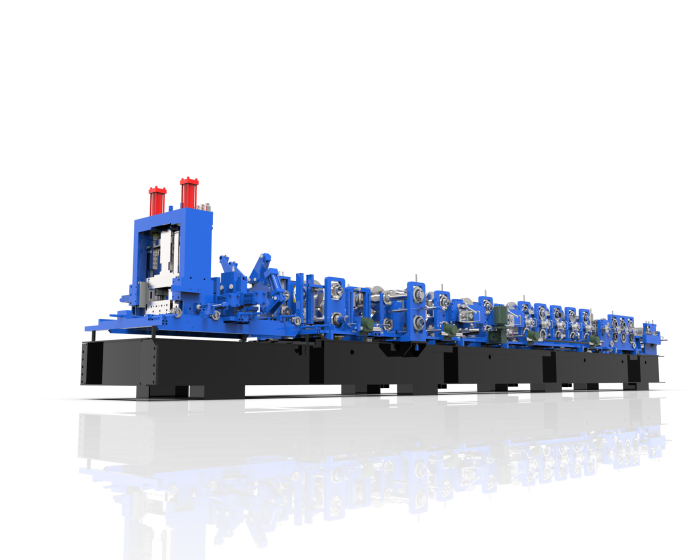
Roll forming technology has become an essential part of modern infrastructure development. By transforming metal coils into high-quality profiles through a continuous manufacturing process, cz purlin roll forming machine helps support large-scale projects with improved productivity, accuracy, and cost efficiency. Its ability to produce structural components at high volumes makes it a valuable solution for infrastructure-related industries.
The Growing Need for Efficient Infrastructure Solutions
Modern infrastructure projects often involve complex construction requirements and strict project timelines. Roads, bridges, rail systems, airports, warehouses, and utility facilities all depend on structural components that meet precise engineering specifications.
Traditional fabrication methods may struggle to deliver the production speed and consistency required for large-scale developments. Roll forming technology provides a practical alternative by enabling continuous manufacturing with minimal material waste and high dimensional accuracy.
Benefits of Roll Forming Technology for Infrastructure Projects
High-Volume Production Capability
Infrastructure projects frequently require large quantities of metal components. Roll forming systems are designed for continuous production, allowing manufacturers to produce high volumes of profiles efficiently.
This capability helps suppliers meet project deadlines while maintaining consistent product quality throughout production runs.
Consistent Product Quality
Quality and reliability are critical in infrastructure construction. Components used in bridges, buildings, transportation systems, and utility structures must meet strict engineering standards.
Roll forming technology ensures consistent dimensions and uniform profile quality, helping manufacturers deliver products that meet project specifications.
Improved Material Efficiency
Efficient material utilization is an important consideration for both manufacturers and project developers. Roll forming minimizes scrap generation by shaping metal through a controlled and continuous process.
Reduced material waste helps lower production costs while supporting more sustainable manufacturing practices.
Faster Project Delivery
Timely completion is a major priority in infrastructure development. Delays in material supply can impact construction schedules and increase project costs.
The high-speed production capabilities of roll forming systems help ensure a steady supply of components, supporting faster project completion and improved operational efficiency.
Design Flexibility
Infrastructure projects often require a variety of profile shapes and sizes. Modern roll forming equipment can produce customized profiles tailored to specific structural and engineering requirements.
This flexibility allows manufacturers to support diverse infrastructure applications while maintaining production efficiency.
Infrastructure Applications of Roll Forming Technology
Roll forming technology is widely used in infrastructure-related industries, including:
• Transportation facilities
• Railway systems
• Airport construction projects
• Industrial warehouses
• Commercial buildings
• Utility and power infrastructure
• Solar energy support structures
• Agricultural and storage facilities
Its versatility makes roll forming a key manufacturing process for both public and private infrastructure developments.
Supporting Structural Steel Construction
Steel structures are widely used in modern infrastructure because of their strength, durability, and design flexibility. Structural components such as purlins play an important role in supporting roofing and wall systems across industrial and commercial buildings.
A modern cz purlin machine helps manufacturers produce high-quality purlins with excellent dimensional accuracy and production efficiency. This allows suppliers to meet the growing demand for steel building components used in infrastructure projects.
Similarly, a cz purlin roll forming machine enables automated production of both C and Z purlins, providing flexibility for different construction requirements. The ability to quickly adjust profile specifications helps manufacturers serve a wider range of infrastructure applications.
Choosing the Right Roll Forming Solution
When selecting roll forming equipment for infrastructure-related production, manufacturers should consider factors such as production capacity, automation level, profile flexibility, material compatibility, and maintenance requirements.
The right system should provide reliable performance, efficient operation, and the ability to adapt to changing project demands. Investing in advanced roll forming technology can help manufacturers improve competitiveness while supporting long-term industry growth.
Conclusion
As infrastructure expansion continues worldwide, the need for efficient and reliable manufacturing solutions becomes increasingly important. Roll forming technology helps meet these demands by providing high-volume production, consistent quality, material efficiency, and design flexibility.
Whether producing structural components, transportation profiles, or purlins using a cz purlin machine or a cz purlin roll forming machine, roll forming technology offers a practical and cost-effective solution for supporting modern infrastructure development and long-term construction success.